Search Pool Homes With No HOA
Port St. Lucie Pool Homes With No HOA

YOUR FLORIDA LIFESTYLE STARTS HERE! Welcome to this beautifully maintained 3-bedroom, 2-bathroom home in the desirable gated community of Heritage Oaks in Port St. Lucie....

- 3 Beds
- 2 Baths
- A12112695 MLS
- 34987 Zip Code
- Tradition Plat No 18 SubDv.

BEAUTIFUL RANCH-STYLE HOME, SPACIOUS 3 BEDS, 2 BATHS, WALK-IN CLOSET, ACCORDION SHUTTERS, SCREENED-IN POOL, 2-CAR GARAGE. PLENTY OF STORAGE, SCREENED PATIO FOR RELAXATION...
- 3 Beds
- 2 Baths
- B26092522 MLS
- 34984 Zip Code
- Port St Lucie Section 39 SubDv.

BRING THE BOAT, ENJOY THE POOL & FORGET THE HOA! Rare Sandpiper Bay gem! This beautifully remodeled 4BR/3BA/2-car garage home sits on a fully fenced .49-acre corner lot w...
- 4 Beds
- 3 Baths
- B26092345 MLS
- Sandpiper Bay Bldg.
- 34952 Zip Code
- Sandpiper Bay SubDv.

MOVE RIGHT INTO THIS METICULOUS UPGRADED LAGO PLAN ON A LAKEFRONT LOT IN PGA VERANO WITH PRIVATE POOL! This 2BR+Den/2BA/2CG home is stunning & brimming with thoughtful fi...
- 2 Beds
- 2 Baths
- B26092318 MLS
- Pga Verano Bldg.
- 34987 Zip Code
- Verano South Pud 1 - Pod A - Plat No. 1 SubDv.

Vaulted ceilings, a finished kitchen, and a private screened pool. Sold fully furnished.The open layout runs from the living room to the kitchen to the dining area. Lamin...
- 3 Beds
- 2 Baths
- A12111807 MLS
- 34983 Zip Code
- Port St Lucie Section 2 SubDv.

Front-row golf views at a price that leaves room for your personal touches! This 4-bedroom, 2-bath pool home offers 2,400 sq ft under air on the 10th hole of The Champion...
- 4 Beds
- 2 Baths
- B26092270 MLS
- 34983 Zip Code
- St James Golf Club Parcel A SubDv.

Discover this beautiful three-bedroom (could be 4-bed), two-bath, two-car garage, CBS home in the desirable Torino Pkwy area of Port St. Lucie! Built by Associated Homes,...
- 3 Beds
- 2 Baths
- B26092238 MLS
- 34986 Zip Code
- Port St Lucie Section 44 SubDv.

Don't miss this beautifully upgraded 3BR plus Den/2BA home with a 2-car garage in the highly sought-after Estates at Sawgrass Lakes. Why you'll love this home: The View: ...
- 3 Beds
- 2 Baths
- B26092167 MLS
- 34953 Zip Code
- Sawgrass Lakes Phase 3a SubDv.

Welcome to The Lakes at Tradition, a desirable gated community! This beautifully maintained 2-bedroom, 2-bath DiVosta home features quality poured-concrete construction a...
- 2 Beds
- 2 Baths
- B26092046 MLS
- The Lakes At Tradition Bldg.
- 34987 Zip Code
- Tradition Plat No 30 SubDv.

Welcome to this adorable, beautifully remodeled pool home in Port St. Lucie! Thoughtfully updated from top to bottom, this charming home offers the perfect combination of...
- 2 Beds
- 2 Baths
- B26091960 MLS
- 34952 Zip Code
- Port St Lucie Section 30 SubDv.

Welcome to 219 SW Holden Terrace, a unique one-story home situated on a spacious 0.46-acre lot with no HOA. Offering versatile living spaces and room for recreational veh...
- 4 Beds
- 3 Baths
- B26091797 MLS
- Port Saint Lucie Bldg.
- 34984 Zip Code
- Port Saint Lucie SubDv.

Beautifully Remodeled 3/2/2 Pool Home! NEW ROOF 2026! REMODELED INTERIOR! SCREENED-IN POOL with Cabana Bath! GRANITE COUNTER TOPS, FLORIDA LIVING AT ITS FINEST! Welc...
- 3 Beds
- 2 Baths
- B26091591 MLS
- 34983 Zip Code
- Port St Lucie Section 13 SubDv.

Welcome to this inviting 3 bedroom, 2 bath, 2 car garage South Florida home featuring a screened-in swimming pool and a whole-house generator for added comfort and peace ...
- 3 Beds
- 2 Baths
- M20057343 MLS
- Port St Lucie Sec 31 Bldg.
- 34953 Zip Code
- Port St Lucie Sec 31 SubDv.

YOUR BACKYARD PARADISE AWAITS! Beautiful pond views, a fairway backdrop, and an outdoor space made for entertaining—this exceptionally well-maintained Sandpiper Bay home ...
- 3 Beds
- 2 Baths
- B26091492 MLS
- N/A Bldg.
- 34952 Zip Code
- South Port St Lucie Unit 14 SubDv.

Welcome to easy, one-level living in a beautifully upgraded Port St. Lucie home where privacy, comfort, and convenience come together. Fully updated from the floors and k...
- 3 Beds
- 2 Baths
- B26083606 MLS
- 34983 Zip Code
- Port St Lucie Section 10 SubDv.

STUNNING FULLY REMODELED 5-BEDROOM, 3-BATH POOL HOME! Featuring a spacious open floor plan, gorgeous new kitchen with Taj Mahal quartz countertops, stainless steel applia...
- 5 Beds
- 3 Baths
- B26091480 MLS
- 34953 Zip Code
- Port St Lucie Section 37 SubDv.

Discover an incredible opportunity to own this spacious 4-bedroom, 3-bathroom CBS home built in 2006, featuring a private screened-in pool, attached 2-car garage, and NO ...
- 4 Beds
- 3 Baths
- B26091359 MLS
- 34953 Zip Code
- Port St Lucie Section 41 SubDv.

GENEROUS LIVING SPACES, SOLID CBS CONSTRUCTION & SUBSTANTIAL RECENT HOME UPGRADES THROUGHOUT!! An oversized corner lot of over 1/3 acres distinguish this 3-bed, 2-bath po...
- 3 Beds
- 2 Baths
- M20057272 MLS
- Port St Lucie Sec 29 Bldg.
- 34952 Zip Code
- Port St Lucie Sec 29 SubDv.

Why wait to build? This 2025 Mattamy home in Seville at Tradition is move-in ready, with a heated pool and spa! It offers 4 bedrooms, 3 baths and a flex room, and the spl...
- 4 Beds
- 3 Baths
- B26091145 MLS
- Seville Bldg.
- 34987 Zip Code
- Seville Phase 1 SubDv.

Welcome to 2349 SE Delano Rd, nestled in the desirable Sandpiper community! Situated on a quiet, no-outlet street, this beautifully maintained home offers comfort, privac...
- 3 Beds
- 2 Baths
- B26091168 MLS
- 34952 Zip Code
- South Port St Lucie Unit 6 SubDv.

Welcome to this beautiful pool home, offering 2,061 sqft of comfortable living space on an oversized CORNER LOT with NO HOA! An inviting circular paver driveway and attra...
- 3 Beds
- 2 Baths
- A12110408 MLS
- 34953 Zip Code
- Port St Lucie Section 22 SubDv.

Enjoy Florida living in this upgraded 4-bedroom, 2-bathroom CBS pool home built in 2021! Featuring impact glass windows and doors, updated flooring, and numerous upgrades...
- 4 Beds
- 2 Baths
- B26090917 MLS
- 34953 Zip Code
- Port St Lucie Section 31 SubDv.

**YOUR FLORIDA POOL HOME AWAITS!** Beautifully maintained 3-bedroom, 2-bath CBS home with a 2-car garage, NEW ROOF (2025), and NO HOA! Enjoy a bright, welcoming interior ...
- 3 Beds
- 2 Baths
- B26090859 MLS
- 34983 Zip Code
- Port St Lucie Section 43 SubDv.

Welcome home to this beautifully updated 3-bedroom, 2-bath pool home, offering the perfect blend of comfort and Florida living. The bright, inviting interior has been fre...
- 3 Beds
- 2 Baths
- B26090620 MLS
- 34953 Zip Code
- Port St Lucie Section 14 SubDv.

Welcome to this beautifully maintained 3 bed, 2 bath pool home in Port St. Lucie! Peace of mind with a 3-year-old roof and 2-year-old A/C. Lush tropical landscaping, a co...
- 3 Beds
- 2 Baths
- B26089927 MLS
- 34953 Zip Code
- Port St Lucie Section 41 SubDv.

Floor to ceiling, this gorgeous 2026 new construction Esplanade home offers more upgrades and amenities than any other in the community! Pulling in, you'll appreciate the...
- 3 Beds
- 3 Baths
- B26089629 MLS
- 34987 Zip Code
- Esplanade At Tradition Phase 2 SubDv.

This stunning pool home has it all! Gorgeous plank tile flooring, an oversized quartz island with quartz waterfalls, 10' ceilings with crown molding, a spacious open layo...
- 4 Beds
- 3 Baths
- B26089556 MLS
- 34953 Zip Code
- Port St Lucie Section 9 SubDv.

CBS Constructed three-bedroom, two-bath Pool home is single-story living at its finest. This extremely clean and well maintained home features a resort-like backyard, an ...
- 3 Beds
- 2 Baths
- B26089467 MLS
- 34953 Zip Code
- Port St Lucie Section 21 SubDv.

Beautiful curb appeal welcomes you to this spacious 4-bedroom, 2.5-bath pool home in desirable Paar Estates! Situated on approximately half an acre with lush landscaping ...
- 4 Beds
- 3 Baths
- B26089465 MLS
- 34953 Zip Code
- Port St Lucie Section 37 SubDv.

Discover the perfect blend of coastal charm and relaxed Florida living in this 3-bedroom, 2-bath home on the ocean-access C-24 Canal. The spacious, open floor plan featur...
- 3 Beds
- 2 Baths
- M20057276 MLS
- Port St Lucie Sec 05 Bldg.
- 34953 Zip Code
- Port St Lucie Sec 05 SubDv.

Absolutely Stunning Pool home w/ GOLF AND LAKE Views on the Ryder Golf Course at PGA Village. Features Circular Driveway, 3 Bedrooms, 3.5 Baths, Den/office & 2.5 Car Gara...
- 3 Beds
- 4 Baths
- B26088538 MLS
- Pga Village (Reserve Plantation) Bldg.
- 34986 Zip Code
- Pga Village (Reserve Plantation) SubDv.

**MODERN LUXURY\SALTWATER POOL\SUMMER KITCHEN\TWO FIRST-FLOOR PRIMARY SUITES\ RV & BOAT PARKING!** Welcome to this stunning two-story contemporary residence offering ove...
- 4 Beds
- 5 Baths
- B26088301 MLS
- 34984 Zip Code
- Port St Lucie Section 18 SubDv.

DON'T MISS...NEED TO SELL...DESIGNER FAMILY HOME that boasts 5 FULL bedrooms and 4 FULL bathrooms with large loft is awaiting its forever homeowner. Home offers top of th...
- 5 Beds
- 4 Baths
- A12105990 MLS
- 34984 Zip Code
- Veranda Plat No 6 Veranda SubDv.

**NO HOA! BEAUTIFUL 4-BEDROOM POOL HOME!** Enjoy the best of Florida living in this spacious 4-bedroom, 2-bath home offering 2,310 sq. ft. of living space and a two-ca...
- 4 Beds
- 2 Baths
- B26087938 MLS
- 34984 Zip Code
- Port St Lucie Section 13 SubDv.

**Beautifully Updated Pool Home with $18,000 in Buyer Incentives!** Welcome to 197 SW Twig Ave, Port St. Lucie, FL a 4-bedroom, 3-full-bath corner-lot home offering fres...
- 4 Beds
- 3 Baths
- B26087870 MLS
- 34983 Zip Code
- Port St Lucie Section 4 SubDv.

Welcome to this beautifully maintained 2-bedroom, 2-bathroom "Capri" Villa with a private screened-in pool, located in the highly desirable Lakes at Tradition community! ...
- 2 Beds
- 2 Baths
- B26087492 MLS
- The Lakes At Tradition Bldg.
- 34987 Zip Code
- Tradition Plat No 16 SubDv.

Outstanding location! East side of Port Saint Lucie. Close to the beaches, parks, restaurants, hospitals, US1, Jensen Beach and Stuart, and much more...! This place is ne...
- 3 Beds
- 2 Baths
- B26087415 MLS
- 34952 Zip Code
- Port St Lucie Section 30 SubDv.

Enjoy golf-course living in St. Lucie West Country Club Estates. This meticulously maintained, one-owner home features 3 bedrooms, 2 bathrooms, and a versatile den. Relax...
- 3 Beds
- 3 Baths
- B26087338 MLS
- 34986 Zip Code
- Country Club Pointe SubDv.

THE SELLER OFFERING 3% of the sales price toward the buyer's closing costs, PLUS a 1-year home warranty. UPGRADES: A new roof is currently being installed, pool was resur...
- 3 Beds
- 2 Baths
- B26087266 MLS
- Pga Properties Bldg.
- 34986 Zip Code
- Maidstone SubDv.

PRIVATE POOL HOME WITH A NEWER ROOF & GOLF VIEWS IN PGA VILLAGE! Situated on the fourth hole of the Legacy Golf Course with double fairway views, you won't want to miss t...
- 3 Beds
- 3 Baths
- B26087099 MLS
- Pga Village Bldg.
- 34986 Zip Code
- The Pines SubDv.

BEAUTIFUL POOL HOME ON A LAKE FRONT LOT IN THE POPULAR GREENBRIER SUBDIVISION OF PGA VILLAGE! Enjoy the privacy offered in this 2BR+DEN/2BA/2CG home with PRIVATE POOL an...
- 2 Beds
- 3 Baths
- B26087098 MLS
- Pga Village Bldg.
- 34986 Zip Code
- Greenbrier SubDv.

DON'T MISS OUT...NEED TO SELL...DESIGNER FAMILY HOME that boasts 5 full bedrooms and 4 full bathrooms with large loft. Home offers top of the line stainless steel applian...
- 5 Beds
- 4 Baths
- B26086998 MLS
- 34984 Zip Code
- Veranda Gardens SubDv.

THIS TRULY IS WHAT FLORIDA LIVING IS ALL ABOUT! THIS MODERN OASIS IS ONLY A SHORT WALK TO THE TALAVERA CLUBHOUSE AND MINUTES TO THE PRESTIGIOUS PGA VILLAGE AND GOLF COURS...
- 2 Beds
- 2 Baths
- B26086950 MLS
- Verano ''Capraia'' Village Bldg.
- 34986 Zip Code
- Verano SubDv.

Welcome to 609 SE Barr Street in Southbend, Port St. Lucie! Beautifully remodeled 3BR/2BA pool home with elegant finishes, wood-look plank tile flooring, and cathedral ce...
- 3 Beds
- 2 Baths
- B26086875 MLS
- 34984 Zip Code
- Port St Lucie Section 39 SubDv.

This CBS pool home is move in ready with a 2022 roof, granite countertops throughout, and a bright kitchen finished with white shaker cabinets. The primary suite offers t...
- 4 Beds
- 3 Baths
- B26086744 MLS
- 34983 Zip Code
- Port St Lucie Section 48 1st Replat SubDv.

Welcome home to this beautifully maintained 3-bedroom, 2-bath residence offering 1,351 square feet of comfortable, single-level living. The inviting open floor plan creat...
- 3 Beds
- 2 Baths
- B26086728 MLS
- 34952 Zip Code
- Port St Lucie Section 49 SubDv.

None
- 4 Beds
- 2 Baths
- B26086634 MLS
- 34953 Zip Code
- Port St Lucie Section 31 SubDv.

ENJOY FLORIDA LIVING IN THIS SINGLE STORY, 3 BEDROOM 2 BATHROOM HOME IN PORT ST LUCIE FEATURING 1,448 SQUARE FEET OF LIVING SPACE ON A 10,000 SQUARE FOOT LOT, THIS PROPER...
- 3 Beds
- 2 Baths
- B26086607 MLS
- 34983 Zip Code
- Port St Lucie Section 1 SubDv.

Experience coastal living at its finest in this beautifully renovated 4-bedroom, 2-bath home offering approximately 2,300 sq. ft. of stylish living space. Recent upgrades...
- 4 Beds
- 2 Baths
- B26086414 MLS
- 34952 Zip Code
- Port St Lucie Section 30 SubDv.

Step outside to your private retreat, where an enlarged saltwater pool measuring 13'-6" x 30'-0" invites you to unwind beside a flush spa with a tile overflow. A full sc...
- 4 Beds
- 4 Baths
- B26086317 MLS
- 34987 Zip Code
- Belterra Phase 1 Plat 3 SubDv.

WHY WAIT TO BUILD WHEN YOU CAN HAVE IT ALL NOW? Welcome to an exceptional, extensively upgraded home in Esplanade at Tradition, where sophisticated Florida living meets a...
- 3 Beds
- 3 Baths
- B26086091 MLS
- Esplanade At Tradition Bldg.
- 34987 Zip Code
- Esplanade At Tradition SubDv.

NEW ROOF 6/2022, NEW A/C 3/2026. KEYWEST STYLE 3/2 + DEN (POSSIBLE 4 BEDROOMS AS GARAGE WAS CONVERTED TO A BIG ROOM). HIGH CATHEDRAL CEILING WITH CELESTORY WINDOWS. WOO...
- 3 Beds
- 2 Baths
- B26085845 MLS
- 34984 Zip Code
- Port St Lucie Section 18 SubDv.

Your own slice of paradise with a pool, privacy, and NO HOA! Situated on a corner lot, this 3-bedroom, 2-bath home with a 2-car garage blends inviting character with thou...
- 3 Beds
- 2 Baths
- B26085684 MLS
- 34953 Zip Code
- Port St Lucie Section 34 SubDv.

OCEAN ACCESS pool home with a private dock featuring water and electric, a 10,000-pound boat lift with NO HOA. Located in the heart of Port St. Lucie, this CBS home is pe...
- 3 Beds
- 2 Baths
- B26085694 MLS
- 34983 Zip Code
- Port St Lucie Section 26 SubDv.

Step into effortless Florida living with this fully furnished and beautifully Move-In ready 3BR/2BA pool home, perfectly situated in a quiet, central Port St. Lucie locat...
- 3 Beds
- 2 Baths
- B26085696 MLS
- 34952 Zip Code
- South Port St Lucie Unit 15 SubDv.

Beautifully maintained spacious 5-bedroom, 3-bathroom home featuring a desirable Jack and Jill bathroom, perfect for family living. Enjoy peace of mind with a recently re...
- 5 Beds
- 3 Baths
- A12102915 MLS
- 34953 Zip Code
- Port St Lucie Section 19 SubDv.

Welcome to 609 SW Romora Bay, a spacious 4-bedroom, 2.5-bath pool home situated on a 0.32-acre corner lot in the desirable Lake Charles community of St. Lucie West. With ...
- 4 Beds
- 3 Baths
- B26085399 MLS
- Lake Charles Bldg.
- 34986 Zip Code
- Lake Charles SubDv.

Rare Sandpiper Bay pool home on a beautifully landscaped .45-acre corner lot! This updated 3-bedroom plus den/office, 2-bath home with 2-car garage offers the space, priv...
- 3 Beds
- 2 Baths
- B26085458 MLS
- 34952 Zip Code
- South Port St Lucie Unit 14 SubDv.

This contemporary ranch features the Fairview floor plan with a heated pool and spa! Enjoy a flexible, open floor plan ideal for entertaining & modern living. Kitchen w/ ...
- 3 Beds
- 2 Baths
- B26085297 MLS
- 34986 Zip Code
- Lakes At Pga Village SubDv.

Custom 3 BR 2 BA 2 CG CBS POOL home in the Eastport community of PSL. Built in 2017. Private saltwater Pool with screen enclosed covered patio. Built-in outdoor kitchen, ...
- 3 Beds
- 2 Baths
- B26085207 MLS
- 34952 Zip Code
- Port St Lucie Section 40 SubDv.

Welcome to this Beautiful Courtyard-Pool home! The main home is 2/2/1 and the guest home is a 1/1. Located on a quiet street in Southbend, Port St Lucie. 2 HOMES in NON-H...
- 3 Beds
- 3 Baths
- B26084829 MLS
- Southbend Bldg.
- 34984 Zip Code
- Port St Lucie Section 39 SubDv.

This 4-bedroom, 2-bathroom single-family residence in Port St. Lucie Section 39 offers 1,725 square feet of comfortable living space on one floor. The open layout is idea...
- 4 Beds
- 2 Baths
- B26084776 MLS
- 34984 Zip Code
- Port St Lucie Section 39 SubDv.

Welcome to this CBS single-story residence in Port St. Lucie offering 1,638 square feet of thoughtfully designed living space. The three-bedroom, two-bathroom floor plan ...
- 3 Beds
- 2 Baths
- B26084567 MLS
- 34953 Zip Code
- Port St Lucie Section 21 SubDv.

Welcome home to this spacious 4-bedroom, 3-bath pool home situated on nearly ½ acre in a convenient Port St. Lucie location! Just minutes from I-95, shopping, schools & T...
- 4 Beds
- 3 Baths
- B26084558 MLS
- 34983 Zip Code
- Port St Lucie Section 48 1st Replat SubDv.

This two-story home in Port St. Lucie Section 3 offers 2,870 square feet of finished living space across five bedrooms and four bathrooms, providing substantial room for ...
- 5 Beds
- 4 Baths
- B26084100 MLS
- 34983 Zip Code
- Port St Lucie Section 3 SubDv.

BRAND NEW ROOF. HEATED SALTWATER POOL. NO HOA. This is what Florida living can still look like at this price! This 3-bedroom, 2-bath home offers over 1,700 square feet wi...
- 3 Beds
- 2 Baths
- B26083879 MLS
- 34952 Zip Code
- Port St Lucie Section 30 SubDv.

Lake-view pool home in Sawgrass Lakes, a gated community in Port St. Lucie, Florida. This 3-bedroom, 2.5-bathroom residence offers just over 2,100 square feet of living a...
- 3 Beds
- 3 Baths
- B26083822 MLS
- 34953 Zip Code
- Sawgrass Lakes Phase 2 SubDv.

Welcome to your dream oasis at 12809 SW Barelli Ct in Port Saint Lucie! Located in Esplanade 55+ gated community. This stunning home features an upgraded kitchen with pre...
- 4 Beds
- 3 Baths
- B26083705 MLS
- Esplanade At Tradition Bldg.
- 34987 Zip Code
- Esplanade At Tradition SubDv.

Beautiful 3 - bedroom + DEN, 3 Bath CBS home with a spacious 3- car garage. Soaring ceilings, and abundant high cabinetry. The versatile den offers the perfect space for ...
- 3 Beds
- 3 Baths
- B26083687 MLS
- 34983 Zip Code
- Port St Lucie Section 25 SubDv.

Enjoy Florida living with your own screened pool, spacious patio, and fully fenced backyard! This 2 bedroom, 3 full bath CBS home features a split floor plan with both a ...
- 2 Beds
- 3 Baths
- M20057117 MLS
- Port St Lucie Sec 01 Bldg.
- 34983 Zip Code
- Port St Lucie Sec 01 SubDv.

Welcome to the Florida lifestyle you've been waiting for! Located in the desirable 55+ Cresswind community within PGA Verano, this beautifully appointed 2-bedroom, 2-bath...
- 2 Beds
- 2 Baths
- B26083360 MLS
- Cresswind/Verano Bldg.
- 34987 Zip Code
- Verano South Pud 1 - Pod B - Plat No. 2 SubDv.

Your private, modern resort awaits on this exceptional half-acre corner lot. Completely transformed from top to bottom, this turnkey 3-bedroom, 2-bathroom pool home combi...
- 3 Beds
- 2 Baths
- B26083329 MLS
- 34953 Zip Code
- Port St Lucie Section 20 SubDv.

BRAND-NEW ROOF! Beautifully renovated 4-bedroom, 2-bath POOL HOME offering over 2000 sq.ft. of living space on an oversized fully fenced lot with NO HOA! This move-in-re...
- 3 Beds
- 2 Baths
- B26083107 MLS
- 34983 Zip Code
- Port St Lucie Section 13 SubDv.

Enjoy a country club lifestyle without the membership fee in this immaculate, spacious 2025 Kolter Paige model in PGA Verano. Situated on a premium corner lot overlooking...
- 3 Beds
- 3 Baths
- B26083031 MLS
- Pga Verano Bldg.
- 34987 Zip Code
- Pga Verano SubDv.

Welcome to your own private slice of Florida paradise! Nestled on an expansive 10,130 sq ft lot in the heart of desirable Port Saint Lucie, this pristine 3-bedroom, 2-bat...
- 3 Beds
- 3 Baths
- A12096661 MLS
- 34983 Zip Code
- Port St Lucie Section 43 SubDv.

This 3-bedroom, 2-bath single-family home in Highland Glen offers 2,132 square feet of comfortable living space in Port St. Lucie. The one-story floor plan provides conve...
- 3 Beds
- 2 Baths
- B26082881 MLS
- 34952 Zip Code
- Highland Glen SubDv.

Welcome to this inviting 3-bed, 2-bath pool home in Port St. Lucie! This furnished home offers a comfortable layout and the perfect opportunity to enjoy the Florida lifes...
- 3 Beds
- 2 Baths
- B26082746 MLS
- 34984 Zip Code
- Port St Lucie Section 39 SubDv.

Enjoy the freedom of homeownership without mandatory HOA fees on a generous half-acre homesite in desirable Sandpiper Bay, Port St. Lucie. This spacious 4-bedroom, 3-bath...
- 4 Beds
- 3 Baths
- B26082699 MLS
- Sandpiper Bay Bldg.
- 34952 Zip Code
- Sandpiper Bay SubDv.

Welcome to 2031 SW JAGUAR Ave! This 3 bedroom, 2 bath pool home is situated on a beautiful .49 acre lot in Port St. Lucie, FL with NO HOA. Offering exceptional living...
- 3 Beds
- 2 Baths
- B26082535 MLS
- 34953 Zip Code
- Port St Lucie Section 31 SubDv.

None
- 2 Beds
- 2 Baths
- B26082371 MLS
- 34983 Zip Code
- Port St Lucie Section 45 SubDv.

Welcome to this exceptional waterfront residence in Lake Charles, Port St Lucie. This single-story home offers 2,291 square feet of thoughtfully designed living space wit...
- 4 Beds
- 3 Baths
- B26082151 MLS
- 34986 Zip Code
- Lake Charles Phase 1b SubDv.

Welcome to this spacious 3-bedroom, 2-bath pool home that offers 1,785 sq. ft. of living space a 2020 roof, and sits on a generous .32-acre corner lot with beautiful land...
- 3 Beds
- 2 Baths
- B26081951 MLS
- 34983 Zip Code
- Port St Lucie Section 27 SubDv.

Welcome to this beautiful 4-bedroom, 3.5-bath single-family residence on a corner lot in Port St. Lucie, offering ample square feet of comfortable living space on one flo...
- 4 Beds
- 4 Baths
- B26081886 MLS
- 34952 Zip Code
- Port St Lucie Section 40 SubDv.

Welcome to your private tropical oasis! Situated on a sprawling, oversized 1/3-acre lot with a fully fenced backyard, beautiful mature trees, and lush tropical landscapin...
- 3 Beds
- 2 Baths
- B26081672 MLS
- 34952 Zip Code
- Port St Lucie Section 40 SubDv.

Screened pool home on an oversized fenced lot! This 2 bedroom 2 bath CBS home features a 2022 metal roof, original terrazzo floors, a carport, brand new pool pump and ac...
- 2 Beds
- 2 Baths
- B26081663 MLS
- 34983 Zip Code
- River Park Unit 9 Part C SubDv.

Welcome home to a spacious Port St. Lucie retreat where comfort, privacy, and outdoor living come together. This 3-bed, 2-bath pool home has a assumable VA loan while si...
- 3 Beds
- 2 Baths
- B26081560 MLS
- 34953 Zip Code
- Port St Lucie Section 11 SubDv.

Come see this beautifully updated pool home situated on a spacious corner lot! Step outside to your own tropical retreat featuring a private, fenced backyard, sparkling p...
- 4 Beds
- 2 Baths
- B26081532 MLS
- 34953 Zip Code
- Port St Lucie Section 19 SubDv.

BOATER & GARDENER’S PARADISE! Direct ocean access, lush tropical landscaping, and an impressive collection of exotic trees create a truly unique waterfront setting. This ...
- 4 Beds
- 3 Baths
- A12096581 MLS
- 34983 Zip Code
- Waterfront 25min Ocean SubDv.

SELLER OFFERING $4,000 TO BUYER AT CLOSING! Better than new. Built in 2026 and extensively upgraded, this 3-bedroom, 2-bath lakefront pool home sits on an oversized 0.30-...
- 3 Beds
- 2 Baths
- B26081348 MLS
- Four Seasons At Wylder Bldg.
- 34987 Zip Code
- Ltc Ranch West Pod 6a Phase 1 SubDv.

THIS IS IT!!! Welcome to paradise living at it's best, this 4 bedroom 3 full bath heated pool home with new pool pump and filtration system, sits on an oversized corner ...
- 4 Beds
- 3 Baths
- B26081311 MLS
- 34984 Zip Code
- Port St Lucie Section 39 SubDv.

Lakefront living takes center stage in this 2025 Kolter Valerie in PGA Verano. On a 13,504-square-foot estate homesite with southeast rear exposure, the 3,782-square-foot...
- 4 Beds
- 6 Baths
- B26081112 MLS
- Pga Verano Bldg.
- 34987 Zip Code
- Pga Verano SubDv.

MOTIVATED SELLER!!! PRICE REDUCTION...This beautifully upgraded residence combines comfort, technology, energy efficiency & resort-style Florida living. Step inside to so...
- 4 Beds
- 3 Baths
- A12095762 MLS
- 34953 Zip Code
- Port St Lucie Section 17 SubDv.

EXPANDED TUSCANY MODEL in The Vineyards, a gated community in highly desirable St. Lucie West! Situated on a quiet cul-de-sac with a peaceful PRESERVE VIEW, this impressi...
- 4 Beds
- 4 Baths
- B26080829 MLS
- Vineyards Bldg.
- 34986 Zip Code
- Tortoise Cay At St Lucie West Plat No 130 SubDv.

Beautiful and spacious 4-bedroom, 2-bathroom home with a 2-car garage and an inviting open floor plan. The living and dining areas flow into a kitchen featuring granite c...
- 4 Beds
- 2 Baths
- A12095418 MLS
- 34953 Zip Code
- Port St Lucie Section 21 SubDv.

This Mercedes Home is 4300 sq ft 5 bedroom 4 bath Two story large house on a great lot with a pine trees, mango trees, and bamboo surrounding the rear perimeter of Torino...
- 5 Beds
- 4 Baths
- B26080653 MLS
- 34986 Zip Code
- Port St Lucie Section 44 SubDv.

This meticulously maintained heated pool (propane and solar) and spa home offers the perfect blend of luxury, comfort, and peace of mind. Step inside to find beautiful ti...
- 4 Beds
- 2 Baths
- B26080611 MLS
- 34952 Zip Code
- Port St Lucie Section 40 SubDv.

Move right into this 2024-built CBS pool home! With 3 bedrooms, 2 bathrooms, and a 2-car garage. Attractive stone accents on the front of the home add curb appeal, and th...
- 3 Beds
- 2 Baths
- B26080442 MLS
- 34984 Zip Code
- Port St Lucie Section 18 SubDv.

Gorgeous 3 bedroom, 2 bathroom CBS pool home in desirable Torino with 2,006 sq ft of living space! Open split floor plan with vaulted ceilings, tile and laminate flooring...
- 3 Beds
- 2 Baths
- B26080098 MLS
- 34986 Zip Code
- Port St Lucie Section 44 SubDv.

Eighteen-foot ceilings, grand chandeliers, and natural light pouring through an open floor plan make this fully updated 4-bedroom, 2.5-bath home feel like nothing else on...
- 4 Beds
- 3 Baths
- B26079913 MLS
- 34986 Zip Code
- Port St Lucie Section 44 SubDv.

Recently updated property: new central AC system, new refrigerator and Range, remodeled baths, central vacuum, ceiling fans, light fixtures, accordion storm shutters, sec...
- 3 Beds
- 2 Baths
- B26079869 MLS
- 34984 Zip Code
- Port St Lucie Section 39 SubDv.
Pool Homes for Sale in Port St. Lucie With No HOA
A private pool and no homeowners association is a combination that is hard to find in most of South Florida and comparatively easy here. No dues, no board, no approval to resurface your deck or put up a fence — and your own pool rather than a shared one you share with two hundred neighbours. The listings above are Port St. Lucie pool homes with no HOA.
- Homes for Sale
- Why This Combination Matters
- What a Pool Actually Costs to Run
- What to Inspect on a Pool Home
- Insurance and Safety Requirements
- Buying Without a Pool and Adding One
- Other Searches
- FAQs
Why This Combination Matters
In a community with an association, a pool usually comes with rules — what colour your cage can be, what kind of fence, whether you can screen it, when work can happen, and an approval process before any of it. In a no-HOA home, the only constraints are the city code and the safety requirements of Florida law, both of which are public and knowable.
There is also a financing dimension. HOA dues sit inside your monthly housing payment when a lender calculates your debt-to-income ratio. A no-HOA pool home puts that money back into borrowing power — which on a pool home matters, because you will want some of it for maintenance.
What a Pool Actually Costs to Run
Buyers routinely budget for the house and forget the pool is a second system with its own economics. The components:
| Chemicals and service | Either your time every week or a monthly service. Both are ongoing and neither is optional in the Florida climate. |
|---|---|
| Electricity | The pump is one of the larger loads in a Florida home. A variable-speed pump costs more up front and materially less to run than a single-speed — worth checking which one is installed. |
| Heating, if it is heated | A heat pump, gas heater or solar panels. Solar is cheap to run and slow; gas is fast and expensive. Ask which, and how old. |
| Resurfacing | Pool surfaces have a finite life measured in years, not decades. This is the big one, and a pool nearing the end of its surface is a real negotiating point. |
| Screen enclosure | Cages have their own lifespan, and rescreening is a periodic cost. Storm damage to a cage is also a common insurance claim. |
What to Inspect on a Pool Home
A standard home inspection often excludes the pool or covers it superficially. Order a separate pool inspection. It should cover:
- Structure and surface — cracks, staining, hollow spots, remaining life of the finish.
- Equipment — pump, filter, heater, timer, automation, and whether any of it is leaking.
- Plumbing and the shell — a leak test is worth the money. Underground leaks are expensive and not visible.
- Electrical bonding and GFCI — a genuine safety item, and a common failure on older pools.
- Cage and deck — screen condition, anchoring, deck cracks and drainage away from the house.
- Permits — that the pool, the cage and any later work were permitted. Unpermitted pool work is more common than people expect and can complicate both insurance and resale.
Insurance and Safety Requirements
Florida law requires residential pools to have a safety barrier — typically a compliant fence, a pool safety cover, or approved door and window alarms on any access from the house. This applies whether or not there is an association, and your insurer will care about it independently. A screen enclosure alone does not necessarily satisfy the requirement.
Insurers also treat pools as a liability exposure. Expect questions about fencing, diving boards and slides, and expect your liability coverage to be scrutinised more than it would be on a house without one. Get a quote during the inspection period so the cost is known before your contingencies expire.
Buying Without a Pool and Adding One
Worth pricing as an alternative. Port St. Lucie's quarter-acre lots frequently have room for a pool, and a no-HOA home means no architectural review to get through — just city permitting. Buying a well-located house without a pool and building one can work out better than paying the premium for an existing pool that needs resurfacing.
The counter-argument is time and cost certainty. Building means permits, contractors and months of waiting, at a price you agree today for work delivered later. Buying existing means you swim this summer. Which is right depends on how soon you want the pool and how much of the work the existing one needs.
Want the pool costed before you offer?
Equipment ages, surface life and the insurance quote decide whether a pool home is a bargain or a project. I can get you those answers during the inspection period.
RE/MAX — Port St. Lucie agent.
Other Searches
- All Pool Homes
- No HOA $250K–$300K
- 3-Car Garage Under $300K
- CBS Homes
- PSL $200K–$250K
- New Construction
- All Port St. Lucie Homes
Frequently Asked Questions
Can you find pool homes with no HOA in Port St. Lucie?
Yes, and more easily than in most of South Florida. Much of Port St. Lucie was platted as individual lots with no association, so private pool homes with no dues are a normal part of the inventory rather than a rarity. The listings on this page are filtered to exactly that.
What does a pool cost to maintain in Florida?
The recurring costs are chemicals and either your time or a service, plus the electricity to run the pump — which is one of the larger loads in the house, and much lower with a variable-speed pump. The periodic costs are the ones that catch people: resurfacing and rescreening both have a finite lifespan and a four-figure price.
Do I need a fence around a pool in Florida?
Florida requires residential pools to have a safety barrier, which can be a compliant fence, an approved safety cover, or alarms on doors and windows giving access from the house. This applies whether or not there is an HOA, and a screen enclosure by itself may not satisfy it. Confirm the specific property complies before closing.
Does a pool raise my homeowners insurance?
Generally yes, mainly as a liability exposure rather than a structural one. Insurers ask about fencing, diving boards and slides, and may require higher liability limits. Get a quote during your inspection period rather than assuming the seller's premium will carry over.
Should I get a separate pool inspection?
Yes. Standard home inspections often exclude the pool or look at it only briefly. A dedicated pool inspection should cover the surface, the equipment, a leak test, electrical bonding and GFCI protection, and the cage and deck. It is inexpensive relative to what it can find.
Is it cheaper to buy a pool home or add a pool later?
It depends on the condition of the existing pool. Port St. Lucie lots are usually large enough to build, and with no HOA there is no architectural review to clear — only city permitting. Buying a good house and building can beat paying a premium for a pool that needs resurfacing. Buying existing means you swim this season.
Does having no HOA help me qualify for the mortgage?
It helps. Lenders count HOA dues inside your monthly housing payment for debt-to-income purposes, so a home without them leaves more room for principal and interest. On a pool home that headroom is useful, because the pool carries running costs the lender does not count but you will still pay.
Recently Sold: Port St. Lucie No-HOA Pool Homes
Closed sales of Port St. Lucie No-HOA Pool Homes, updated from the MLS. Want to know what your home would sell for today? Call (772) 359-1926.
Address Search
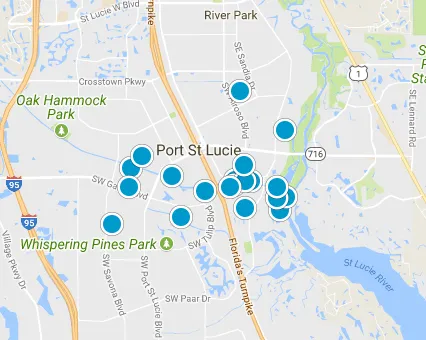
Interactive Map Search