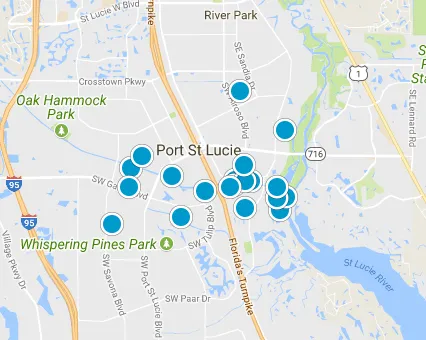
Search Sold Homes in Port St. Lucie
Port St. Lucie Sold Homes Search

Indulge in Luxury Living in Country Club Estates! This stunning 3/3/2 golf front, pool home offers the epitome of refined living. Nestled in a beautiful cul-de-sac, this ...

- 3 Beds
- 3 Baths
- B26036336 MLS
- Country Club Estates Bldg.
- 34986 Zip Code
- Country Club Estates SubDv.

Eighteen-foot ceilings, grand chandeliers, and natural light pouring through an open floor plan make this fully updated 4-bedroom, 2.5-bath home feel like nothing else on...
- 4 Beds
- 3 Baths
- B26079913 MLS
- 34986 Zip Code
- Port St Lucie Section 44 SubDv.

Live Real Estate Auction! Saturday August 15 at 11am. Preview 30 minutes prior to sale. 10% due at time of sale. Must have a 5,000 cashier's check or cash and a blank per...
- 3 Beds
- 3 Baths
- B26062276 MLS
- 34953 Zip Code
- Port St Lucie Section 7 SubDv.

Exceptional estate property offers fabulous Key West style home with Metal Roof on 1.6 Acre private lot with mature landscaping & charm in PGA Village. Beautiful Front Po...
- 5 Beds
- 4 Baths
- B26052761 MLS
- Pga Village (Sabal Creek) Bldg.
- 34986 Zip Code
- Pga Village - Sabal Creek SubDv.

This beautiful home features an open-concept layout with two bedrooms, two bathrooms, and a versatile den/flex room. For your peace of mind, the property is equipped wit...
- 2 Beds
- 2 Baths
- B26048945 MLS
- 34987 Zip Code
- Tradition Plat No 35 SubDv.

What's Special: Golf Course Community. New Construction - August Completion! Built by America's Most Trusted Home Builder. Welcome to the Lazio at 13648 SW Shinnecock Dri...
- 3 Beds
- 3 Baths
- B26014831 MLS
- Astor Creek Bldg.
- 34987 Zip Code
- Astor Creek SubDv.

Beautifully updated 3 bedroom, 2 bath pool home in a desirable Port St. Lucie neighborhood, offering comfort, style, and peace of mind. Freshly painted inside and out. Re...
- 3 Beds
- 2 Baths
- R11159439 MLS
- 34983 Zip Code
- Port St Lucie Section 13 SubDv.

CBS home with 2022 roof, needs TLC. Window Unit AC. No shutters but the screws are in place so they can be purchased.
- 2 Beds
- 2 Baths
- B26079413 MLS
- 34984 Zip Code
- Port St Lucie Section 18 SubDv.

Built in 2006 and offered by only its 2nd owner, this 3BR/3BA CBS pool home is move-in ready with all the major updates done. Open floor plan with high ceilings and tray ...
- 3 Beds
- 3 Baths
- M20056347 MLS
- Port St Lucie Sec 13 Bldg.
- 34983 Zip Code
- Port St Lucie Sec 13 SubDv.

Welcome to this charming single-story Port St. Lucie home offering a functional floor plan and several recent updates. Features include a durable 2006 metal roof, 2017 A/...
- 2 Beds
- 2 Baths
- B26067467 MLS
- 34984 Zip Code
- Port St Lucie Section 18 SubDv.

MODEL LEASEBACK OPPORTUNITY! Discover the Ravenna II, an impressive 3,104-square-foot new construction home offering 4 bedrooms, 3.5 bathrooms, with a study, a 2-car gara...
- 3 Beds
- 4 Baths
- B26067204 MLS
- Glynlea Country Club Bldg.
- 34987 Zip Code
- Ltc Ranch West Pod 9 Phases 2 And 3 SubDv.

Handyman/Fixer Upper - Three bedroom, two bath, two car garage in desirable Sandpiper/Morningside area of Port St Lucie. Home feature a sunken living room, family room a...
- 3 Beds
- 2 Baths
- B26065875 MLS
- 34952 Zip Code
- South Port St Lucie Unit 5 SubDv.

Beautiful & Clean 3/2/2 POOL HOME ON ESTATE-SIZE LOT NO HOA 2002 Riviera model by PACE Homes. Double entry doors, 10' ceilings, plant shelves, and new porcelain flooring ...
- 3 Beds
- 2 Baths
- B26065870 MLS
- Pace Builder Bldg.
- 34952 Zip Code
- South Port St Lucie Unit 4 SubDv.

Huge price reduction!! Home is sold in As Is condition at this new price. Welcome to 977 SE Crosswood Way in desirable Veranda Preserve! This beautifully maintained Lenn...
- 3 Beds
- 2 Baths
- B26063832 MLS
- Veranda Preserve Bldg.
- 34984 Zip Code
- Veranda Preserve West Phase 3 SubDv.

Welcome to this exquisitely maintained home, where true pride of ownership shines through every thoughtfully updated detail. Double doors create a welcoming entrance into...
- 3 Beds
- 2 Baths
- B26063614 MLS
- Lake Forest Bldg.
- 34986 Zip Code
- Lakeforest At St Lucie West Phase 1 SubDv.

Beat the heat with this fabulous pool home in Southbend area! No HOA fees!! Very spacious 3 bedroom 2 bath 2 car garage home with French doors leading to recently redone ...
- 3 Beds
- 2 Baths
- B26051497 MLS
- Southbend Bldg.
- 34984 Zip Code
- Port St Lucie Section 39 SubDv.

Beautiful Home! A Truly Must See Before You Buy! Immaculate thru-out w/ Many Custom Features! Solid Brick Home w/ Newer 3 Year Old Metal Roof, Vaulted Ceilings w/ 3 New S...
- 3 Beds
- 2 Baths
- B26049318 MLS
- 34952 Zip Code
- Port St Lucie Section 30 SubDv.

This Sanderling sits on a large Corner Lot and offers privacy with a partial lake view! Two bedrooms with Den, 2 bath. Just one year old and ready for your personal touc...
- 2 Beds
- 2 Baths
- B26043029 MLS
- Valencia Parc Bldg.
- 34987 Zip Code
- Riverland Parcel D - Plat Four SubDv.

Don’t miss the opportunity to own the Violet model home, offering modern style, functional living space, a prime Port St. Lucie location offering both comfort and conveni...
- 3 Beds
- 2 Baths
- F10551196 MLS
- 34984 Zip Code
- Port St Lucie Sec 18 SubDv.

NO HOA fees at this beautifully designed Passionflower II home, offering 4 bedrooms and 3 bathrooms, including the highly sought-after Extra Suite Plus with a private ent...
- 4 Beds
- 3 Baths
- B26019453 MLS
- 34953 Zip Code
- Port St Lucie Section 34 SubDv.

What's Special: Golf Course View. New Construction - September Completion! Built by America's Most Trusted Home Builder. This thoughtfully designed new home offers a brig...
- 3 Beds
- 3 Baths
- B26015139 MLS
- Astor Creek Bldg.
- 34987 Zip Code
- Astor Creek SubDv.

Better than new, move-in ready and vacant! Lightly lived in only for few months with post builder upgrades, this 3BR + den home features 11'4" ceilings, 10'x 12'sliding d...
- 3 Beds
- 2 Baths
- B26010247 MLS
- Rivella Bldg.
- 34952 Zip Code
- Rivella SubDv.

What's Special: Dedicated Home Office | Close to Amenity. New Construction - September Completion! Built by Taylor Morrison, America's Most Trusted Home Builder. Welcome ...
- 4 Beds
- 3 Baths
- B26000748 MLS
- Central Park Bldg.
- 34987 Zip Code
- Central Park SubDv.

Gorgeous, completely private 4-bedroom, 3-bath single-family pool home offering an exceptional blend of stylish upgrades, indoor comfort and an incredible outdoor living ...
- 4 Beds
- 3 Baths
- B26077999 MLS
- 34953 Zip Code
- Port St Lucie Section 31 SubDv.

This beautifully remodeled pool home is move-in ready and packed with updates. Featuring a NEW ROOF, completely updated kitchen, remodeled bathrooms, new flooring, and fr...
- 3 Beds
- 2 Baths
- B26077569 MLS
- 34983 Zip Code
- Port St Lucie Section 2 SubDv.

This furnished home has a gourmet kitchen designed for both everyday living and entertaining, featuring 42-inch cabinetry, quartz countertops, upgraded appliances, double...
- 2 Beds
- 3 Baths
- B26071152 MLS
- 34987 Zip Code
- Lakepark At Tradition Plat 3 SubDv.

Highly upgraded lakefront Bimini model offers 3 bedrooms, 3 baths, a versatile den that functions as a fourth bedroom/ office, and a dedicated golf cart garage. Refined a...
- 4 Beds
- 3 Baths
- B26064800 MLS
- Valencia Grove Bldg.
- 34987 Zip Code
- Riverland Parcel B - Plat Five SubDv.

Beautifully appointed 3-bedroom, 2-bath home situated on an oversized 7,884-square-foot lakefront lot with breathtaking wide water views. Offering 1,943 square feet of th...
- 3 Beds
- 2 Baths
- A12053260 MLS
- Del Webb Bldg.
- 34987 Zip Code
- Del Webb At Tradition Pla SubDv.

Beautifully renovated 2BR/2BA CBS home with 1-car garage. This move-in-ready property features a 1-year-old roof, newer A/C, water heater and dishwasher, tile flooring t...
- 2 Beds
- 2 Baths
- B26061446 MLS
- 34983 Zip Code
- Port St Lucie Section 13 SubDv.

Welcome to 1901 SW Import Drive, a spacious four-bedroom, two-bathroom pool and canal-front home offering 1,860 square feet of comfortable, single-story living. This prop...
- 4 Beds
- 2 Baths
- B26056041 MLS
- Port St Lucie Bldg.
- 34953 Zip Code
- Port St Lucie SubDv.

Welcome to this exceptional Royal Professional Builders custom home, one of the area's most sought after quality built residences, renowned for superior craftsmanship, ex...
- 3 Beds
- 2 Baths
- B26041515 MLS
- 34953 Zip Code
- Port St Lucie Section 7 SubDv.

Spacious 4BR/3BA home offering over 2,100 sq ft of living space with a desirable split floor plan. Features include a large family room, upgraded kitchen with granite cou...
- 4 Beds
- 3 Baths
- B26011436 MLS
- 34953 Zip Code
- Port St Lucie Section 7 SubDv.

Well-maintained 3-bedroom, 2-bath home situated on a spacious corner lot in Port St. Lucie. The split floor plan offers added privacy, with a comfortable layout that make...
- 3 Beds
- 2 Baths
- B26079594 MLS
- 34953 Zip Code
- Port St Lucie Section 16 SubDv.

Stunning, custom-built pool home overlooking the 16th green in desirable Country Club Estates. This meticulously maintained 3-bedroom, 2-bathroom home with a 2-car garage...
- 3 Beds
- 2 Baths
- B26077150 MLS
- Counrty Club Estates Bldg.
- 34986 Zip Code
- Country Club Pointe SubDv.

This beautifully remodeled lakefront home in Port St. Lucie situated on a spacious lot with a large backyard and peaceful water views. This move-in-ready home has been th...
- 3 Beds
- 2 Baths
- B26077092 MLS
- 34952 Zip Code
- South Port St Lucie Unit 16 SubDv.

Desirable Southbend location! This 2BR/2BA split-plan home sits on a spacious 1/3-acre corner lot framed by beautiful coconut palms. Open-concept living with volume ceili...
- 2 Beds
- 2 Baths
- M20056766 MLS
- Port St Lucie Sec 39 Bldg.
- 34984 Zip Code
- Port St Lucie Sec 39 SubDv.

Unlock the possibilities situated on a spacious 0.28-acre lot in the River Park area, this 3-bedroom, 2-bath concrete-block home offers 977 square feet of living space an...
- 3 Beds
- 2 Baths
- B26068931 MLS
- 34983 Zip Code
- River Park Unit 5 SubDv.

Experience the perfect fusion of timeless architecture and contemporary luxury in one of Tesoro Club's most comprehensively renovated luxury residences. Completely transf...
- 4 Beds
- 5 Baths
- B26050534 MLS
- 34984 Zip Code
- Tesoro Plat No 4 SubDv.

Experience exceptional craftsmanship and modern luxury in this brand-new custom-built residence completed in 2025. Situated on a generous 0.51-acre lot with no HOA, this ...
- 5 Beds
- 6 Baths
- A12031637 MLS
- 34953 Zip Code
- Port St Lucie Section 34 SubDv.

Nicely updates CBS home on a quiet street, built in 2016. The home has a unique 7.5 foot wooden fence around the entire back yard for privacy. The $5K Rainsoft water soft...
- 4 Beds
- 2 Baths
- B26049250 MLS
- Port St Lucie Section 13 Bldg.
- 34984 Zip Code
- Port St Lucie Section 13 SubDv.

NO HOA fees!! Introducing the premier AEGEAN model—where luxury living meets multi-generational design. This thoughtfully crafted home features a private mother-in-law su...
- 4 Beds
- 3 Baths
- B26049228 MLS
- N/A Bldg.
- 34953 Zip Code
- Port St Lucie Section 7 SubDv.

RARE FIND and MOTIVATED SELLER! NO HOA. Spectacular Model perfect home. 4 bdrm, 2 bath, 3 CAR GARAGE, heated salt water pool complete with waterfalls! New hurricane pro...
- 4 Beds
- 2 Baths
- B26042859 MLS
- South Port Bldg.
- 34952 Zip Code
- South Port St Lucie Unit 4 SubDv.

INCOME PRODUCING HOME, WATER FRONT LIVING, and Florida lifestyle all in one beautiful property. This well-maintained CBS POOL HOME SITS ON OVER HALF ACRE WITH NO HOA and ...
- 4 Beds
- 4 Baths
- B26034656 MLS
- Port St Lucie Section 36 Bldg.
- 34953 Zip Code
- Port St Lucie Section 36 SubDv.

UNDER MARKET VALUE, APPRAISED $295K on 4/28/2026. Spacious and value-packed 2 bed, 2 bath home with a 1-car garage, priced under $300K! Freshly painted and featuring a du...
- 2 Beds
- 2 Baths
- B26016495 MLS
- 34983 Zip Code
- Port St Lucie Floresta Pines Unit 2 SubDv.

None
- 5 Beds
- 4 Baths
- B26013771 MLS
- 34987 Zip Code
- Seville 6b Phase 1 SubDv.

Opportunity awaits! This 3-bedroom, 2-bath home offers 1,056 sq. ft. of living space and sits on an oversized 0.29-acre lot with plenty of room to enjoy. Several major im...
- 3 Beds
- 2 Baths
- B26078263 MLS
- 34953 Zip Code
- Port St Lucie Section 41 SubDv.

This well-maintained home offers NO HOA, impact windows throughout, a BRAND-NEW fence, and a HUGE backyard that backs up to a canal! Enjoy added privacy with no immediate...
- 3 Beds
- 2 Baths
- B26075467 MLS
- 34953 Zip Code
- Psl Section 07 SubDv.

The property is subject to a 3 Day First Look Period. The seller will look at and negotiate offers after this period. Cash offers require 10% EMD or $1,000.00 minimum, wh...
- 3 Beds
- 2 Baths
- B26074602 MLS
- 34952 Zip Code
- Port St Lucie Section 30 SubDv.

Experience everyday comfort and practicality at 3642 SW Sterricker St, where functional features enhance daily routines. An in-ground pool is located within the fully fen...
- 4 Beds
- 2 Baths
- B26049743 MLS
- 34953 Zip Code
- Port St Lucie Section 19 SubDv.

Welcome to this charming 3-bedroom, 2.5-bath residence in the heart of Port St. Lucie, offering a blend of comfort, functionality, and Florida lifestyle living. The thoug...
- 3 Beds
- 3 Baths
- B26032752 MLS
- 34984 Zip Code
- Southbend Lakes SubDv.

THIS TWO BEDROOM TWO BATH IS ON A LAKE WITH THE MOST BEAUTIFUL VIEWS OF THE LAKE FROM THE BEDROOMS.ITS IN SPANISH LAKES COMMUNITIES WHERE THE LOT RENT COVERS GOLFING, TE...
- 2 Beds
- 2 Baths
- B26027697 MLS
- 34952 Zip Code
- Spanish Lakes SubDv.

Discover a rare opportunity to own a brand new CBS home on five private acres in one of the Treasure Coast's fastest growing areas. Surrounded by preserve views and a tra...
- 4 Beds
- 3 Baths
- B26018205 MLS
- 34952 Zip Code
- St Lucie Gardens Subdivision SubDv.

NEW ROOF 2026! Beautifully maintained 4-bedroom, 2-bath home with a desirable side-entry 2-car garage, spacious split-bedroom floor plan, and multiple living areas design...
- 4 Beds
- 2 Baths
- B26012593 MLS
- 34953 Zip Code
- Port St Lucie Section 33 SubDv.

Move-in-ready, home appraised FHA at $416K. This fabulous updated four-bedroom, two-bathroom home features a brand-new roof installed in March 2026. The interior and ext...
- 4 Beds
- 2 Baths
- B26008657 MLS
- 34983 Zip Code
- Port St Lucie Section 13 SubDv.

POOL HOME | CORNER LOT | NO HOA! Bring your vision to this 3BED/2BATH Port St. Lucie home offering a great opportunity to renovate and make it your own. Situated on a spa...
- 3 Beds
- 2 Baths
- B26079469 MLS
- 34983 Zip Code
- Port St Lucie Section 25 SubDv.

Bring your vision to this 2/2 home in the heart of PSL. The home retains much of its original interior and will require significant updating, offering an opportunity to r...
- 2 Beds
- 2 Baths
- B26076860 MLS
- 34984 Zip Code
- Port St Lucie Section 18 SubDv.

Enjoy beautiful golf course and water views from this 2-bedroom, 2-bath home in the desirable PGA Village community.A third bedroom has been converted to an office, offer...
- 2 Beds
- 2 Baths
- B26075988 MLS
- 34986 Zip Code
- Verano Pud No 1 Plat No 9 SubDv.

Welcome to this beautifully appointed 2-bedroom, 2-bathroom home with a versatile den, offering just under 1,700 square feet of thoughtfully designed living space in the ...
- 2 Beds
- 2 Baths
- B26065879 MLS
- Vitalia At Tradition Bldg.
- 34987 Zip Code
- Tradition Plat No 35 SubDv.

Set on an impressive 0.46-acre homesite, this non-HOA 3-bedroom, 2-bath Port St. Lucie residence delivers the kind of space, privacy, and versatility that can be hard to ...
- 3 Beds
- 2 Baths
- B26063809 MLS
- Port St Lucie Bldg.
- 34953 Zip Code
- Port St Lucie SubDv.

Well-Maintained 3/2/2 home - new shingle roof to be installed! Updated with modern finishes throughout. Spacious brick home featuring separate living, dining, and family ...
- 3 Beds
- 2 Baths
- B26053663 MLS
- Port St Lucie Section 6 Bldg.
- 34983 Zip Code
- Port St Lucie Section 6 SubDv.

Welcome home to this super cute 2-bedroom, 2-bath townhome nestled in the highly desirable King's Isle community in the heart of St. Lucie West. Freshly painted and featu...
- 2 Beds
- 2 Baths
- B26051076 MLS
- 34986 Zip Code
- Kings Isle SubDv.

NEW LOWER PRICE, SELLERS ARE MOTIVATED! NEW ROOF (2024) and NO HOA! This beautifully designed Mercedes-built home checks all the boxes with a spacious 4-bedroom, 2-bath s...
- 4 Beds
- 2 Baths
- B26048198 MLS
- 34953 Zip Code
- Port St Lucie Section 19 SubDv.

Beautifully updated 4 bedroom, 2 bathroom home in the heart of Port St. Lucie offering comfort, style, and major upgrades already completed. Enjoy a covered front porch, ...
- 4 Beds
- 2 Baths
- B26035917 MLS
- 34953 Zip Code
- Port St Lucie Section 21 SubDv.

The Biscayne Bay floorplan offers spacious single-story living with 4 bedrooms, 2.5 bathrooms, and a 2-car garage. Featuring an open-concept layout, a large kitchen overl...
- 4 Beds
- 3 Baths
- B26025621 MLS
- 34987 Zip Code
- Cadence Wg5d Phase 1 SubDv.

RARE CANAL LOT WITH NO REAR NEIGHBORS. This 2020 Lennar Brilliance offers 3 bedrooms, 2 bathrooms, 1,649 square feet, a tile roof, high ceilings, and a comfortable split ...
- 3 Beds
- 2 Baths
- B26023951 MLS
- 34987 Zip Code
- Copper Creek Plat No 2 SubDv.

Beautiful 3BR/2BA CBS home w/ 2-car garage in all-age, pet-friendly gated community. Just under 3,000 sq ft. Light & bright split floor plan w/ high ceilings, crown moldi...
- 3 Beds
- 2 Baths
- B26022188 MLS
- Lake Charles Bldg.
- 34986 Zip Code
- Lake Charles Ph 3g SubDv.

Welcome to this beautifully updated three-bedroom, two-bathroom home offering a fresh, modern interior and plenty of outdoor space. Step inside to an open, light-filled f...
- 3 Beds
- 2 Baths
- B26078443 MLS
- 34983 Zip Code
- Port St Lucie Section 27 SubDv.

Motivated Seller for quick sale. No HOA! Orig Builder Model was 4 bedroom. Can easily convert to 4 BDRM!! Corner lot .24 acres. $167 a Square Foot asking Price. Vacant Re...
- 3 Beds
- 2 Baths
- B26077187 MLS
- 34953 Zip Code
- Port St Lucie Section 19 SubDv.

If you are looking for an upscale remodeled single-family GEM of a home- this, is it!! Amazing location in Becker Road area! Close to lots of new development. 3 beds, 2...
- 3 Beds
- 2 Baths
- B26070697 MLS
- Port St Lucie Sec 34 Bldg.
- 34953 Zip Code
- Port St Lucie Section 34 SubDv.

Welcome to 3642 SW Conibear Street! This Port St. Lucie home offers comfort, convenience and a versatile layout. Enjoy easy access to I-95 and Florida's Turnpike, plus ne...
- 3 Beds
- 2 Baths
- B26064583 MLS
- 34953 Zip Code
- Port St Lucie Section 19 SubDv.

Land Owned- Lakefront 2 bedroom, 2 with 27' enclosed lanai and two additional porches to soak up the views. Home has laminate and tile floors, 2017 roof, a/c, windows and...
- 2 Beds
- 2 Baths
- B26064161 MLS
- 34952 Zip Code
- Savanna Club Plat I SubDv.

JUST REDUCED..... No HOA'S....and Just a "stone throw away" from St. Lucie West is this 4 bedroom 2 bath home with fenced in yard, in the Torino area. The owner took gre...
- 4 Beds
- 2 Baths
- B26060965 MLS
- Torino Bldg.
- 34986 Zip Code
- Port St Lucie Section 44 SubDv.

Only move in ready Caroline on the lake. This versatile 3 Bedroom, 2 Bath floorplan provides an open main living space and options built to accommodate families of any si...
- 3 Beds
- 2 Baths
- B26060763 MLS
- 34987 Zip Code
- Verano South Pud 1 - Pod SubDv.

What's Special: Gourmet Kitchen | Covered Extended Lanai. New Construction - September Completion! Built by America's Most Trusted Home Builder. Welcome to the Matera at ...
- 3 Beds
- 3 Baths
- A12052615 MLS
- 34987 Zip Code
- Esplanade At Tradition SubDv.

What's Special: Covered Extended Lanai. New Construction - September Completion! Welcome to the Matera at 13433 SW Mazzano Street in Esplanade at Tradition! This beautifu...
- 3 Beds
- 3 Baths
- B26050943 MLS
- Esplanade At Tradition Bldg.
- 34987 Zip Code
- Esplanade At Tradition SubDv.

This beautifully appointed Atlantica model in Valencia Cay features an extensive list of upgrades and sits on an oversized .23-acre lot with room for a future pool. The o...
- 3 Beds
- 3 Baths
- B26048416 MLS
- Riverland Bldg.
- 34987 Zip Code
- Valencia Cay At Riverland SubDv.

Beautifully updated and backing to a peaceful preserve, this move-in ready home in Cascades at St. Lucie West offers privacy, modern upgrades, and the easy Florida lifest...
- 3 Beds
- 2 Baths
- B26046278 MLS
- Cascades Bldg.
- 34986 Zip Code
- Cascades SubDv.

Better than new and move-in ready! Built in February 2026, this beautifully appointed Bergamo in Esplanade at Tradition offers 2 bedroom, 2 baths, a flex room with doors,...
- 2 Beds
- 2 Baths
- B26039806 MLS
- Esplanade At Tradition Bldg.
- 34987 Zip Code
- Esplanade At Tradition Phase 2 SubDv.

Welcome to this spacious three-bedroom, two-bathroom single-family home with no HOA!!! Located in the very desirable Torino area of Port St. Lucie. Offering 2,470 square ...
- 3 Beds
- 2 Baths
- B26037922 MLS
- 34986 Zip Code
- Port St Lucie Section 47 SubDv.

None
- 3 Beds
- 3 Baths
- B26036482 MLS
- Tradition Bldg.
- 34987 Zip Code
- Del Webb Tradition SubDv.

Welcome to 12473 NW Lynch Ln a thoughtful layout featuring a kitchen island and stainless steel appliances. The primary bathroom includes double sinks, complementing the ...
- 3 Beds
- 2 Baths
- B26011790 MLS
- 34987 Zip Code
- Copper Creek Plat No 2 SubDv.

Live the Florida waterfront lifestyle in this updated coastal ranch-style waterfront 4BR/3BA home with pool and 95ft canal frontage, quick access to the ocean. Enjoy a sc...
- 4 Beds
- 3 Baths
- B26008421 MLS
- 34983 Zip Code
- River Park-Unit 4 SubDv.

Spacious 2 bedroom, 2 bath home on a corner lot in the desirable Savanna Club 55+ community. Home is light and bright throughout, newer appliances, laminate floors and of...
- 2 Beds
- 2 Baths
- R11152249 MLS
- Savanna Club Bldg.
- 34952 Zip Code
- Savanna Club Plat Ii SubDv.

Island elevation with spectacular upgrades including impact glass entry door and porcelain wood plank tile flooring throughout. The home offers 3 bedrooms, 2.5 bath, dean...
- 3 Beds
- 3 Baths
- R11131222 MLS
- 34987 Zip Code
- Lakepark At Tradition Plat 3 SubDv.

Furnished 2bed/2bath w/ a RAMP for easy access or opt to use the steps. Private Yard w/ Large Storage Shed & Large Lot w/ Tropical Vibe great for Gardening, Grilling, Bir...
- 2 Beds
- 2 Baths
- R11111711 MLS
- Spanish Lakes Golf Village Bldg.
- 34952 Zip Code
- Spanish Lakes Golf Village SubDv.

Let's Make a Deal/ Motivated Seller. Check Out This 2022 Built, 4 Bed, 2 Bath, 2 Car Garage Fully Fenced CBS Home. Bright Open Floor Plan with a Spacious Living Area, Mod...
- 4 Beds
- 2 Baths
- M20055444 MLS
- Port St Lucie Sec 27 Bldg.
- 34983 Zip Code
- Port St Lucie Sec 27 SubDv.

Completely renovated corner-lot home in one of Port St. Lucie’s closest areas to Tradition—with no Home Owners Association. Enjoy a large, fully fenced yard with plenty o...
- 3 Beds
- 2 Baths
- M20056747 MLS
- Port St Lucie Sec 35 Bldg.
- 34987 Zip Code
- Port St Lucie Sec 35 SubDv.

Discover the perfect blend of luxury, comfort, and convenience in this stunning 3-bedroom, 2-bath home with a 2-car garage, flex room, and custom wine room in Manderlie a...
- 3 Beds
- 2 Baths
- B26072049 MLS
- Manderlie In Tradition Bldg.
- 34987 Zip Code
- Manderlie SubDv.

Spectacular, fully remodeled single-story CBS home in the highly sought-after Port St. Lucie Section 12! Boasting 1,840 sq. ft. of pristine living space, this 3-bedroom, ...
- 3 Beds
- 2 Baths
- B26070257 MLS
- 34953 Zip Code
- Port St Lucie Section 12 SubDv.

MULTIPLE OFFERS; HIGHEST & BEST DUE BY NOON ON 9/7/26. GORGEOUS REMODELED 3/2 POOL home in the heart of Port Saint Lucie w/ no HOA & No Rear Neighbors! Situated on LUSH &...
- 3 Beds
- 2 Baths
- B26067986 MLS
- South Port St Lucie Bldg.
- 34952 Zip Code
- South Port St Lucie Unit 8 SubDv.

Welcome home! This remodeled home gives real security with a new roof from 24' and a brand new AC unit. This single-story, three-bedroom home in Port St. Lucie offers 1,6...
- 3 Beds
- 2 Baths
- B26066690 MLS
- 34983 Zip Code
- Port St Lucie Section 43 SubDv.

Remodeled kitchen & baths. Stainless appliances. Stone counters. New cabinets. Lots of entertaining space. 2 Beautiful decks. 266sf air conditioned Florida Room! 2 split ...
- 2 Beds
- 2 Baths
- B26065846 MLS
- Spanish Lakes Golf Bldg.
- 34952 Zip Code
- Spanish Lakes Golf SubDv.

Exquisitely positioned on a cul-de-sac, this beautiful 3-bedroom, 2-bath home offers an extra-long driveway with parking for approximately 6 vehicles, plus a 2-car garage...
- 3 Beds
- 2 Baths
- B26065324 MLS
- Tradition Bldg.
- 34987 Zip Code
- Cadence Phase 1 SubDv.

Gorgeous lakefront 2/2/2 home with a versatile flex room Isle of San Marino at Kings Isle! This bright and spacious home features an open layout with separate living, din...
- 2 Beds
- 2 Baths
- B26061638 MLS
- 34986 Zip Code
- Kings Isle - Isle Of San Marino SubDv.

Completed in 2023, this beautifully designed residence offers the perfect blend of modern luxury and everyday comfort. Situated on an oversized homesite in Port Saint Luc...
- 4 Beds
- 3 Baths
- B26055871 MLS
- 34953 Zip Code
- Port St Lucie Section 33 SubDv.

This move-in ready CBS ranch home is located in the highly desirable Sandpiper area. The home boasts an open, split floorplan, vaulted ceilings, gorgeous tile throughout....
- 3 Beds
- 2 Baths
- B26054594 MLS
- 34952 Zip Code
- South Port St Lucie Unit 5 SubDv.

Welcome to this beautifully built 2023 CBS home offering modern comfort and an open-concept design in Port St. Lucie. This well-maintained property features tile flooring...
- 4 Beds
- 2 Baths
- B26054248 MLS
- Port St Lucie Section 2 Bldg.
- 34983 Zip Code
- Port St Lucie Section 2 SubDv.

Like-new and charming 2 BR home with an enclosed den is move in ready for you! Attention to detail is present in the Mohawk RevWood plus laminate done in 2024, the new AC...
- 2 Beds
- 2 Baths
- B26053886 MLS
- Pga Verano Bldg.
- 34986 Zip Code
- Verano Pud 1 Plat No 15 SubDv.

Move right into this beautifully updated 3 bedroom, 2-bathroom CBS home that offers peace of mind with a white metal roof (2021), full exterior paint (2022), new electric...
- 3 Beds
- 2 Baths
- B26050686 MLS
- 34953 Zip Code
- Port St Lucie Section 33 SubDv.

Thoughtfully designed single-story home featuring 2 bedrooms, 2.5 bathroom, a versatile study room, and an open concept kitchen, dining, and great room. The spacious owne...
- 2 Beds
- 3 Baths
- B26048448 MLS
- 34987 Zip Code
- Telaro At Southern Grove Phase 2 And 3 SubDv.
Sold Homes in Port St. Lucie: How to Use Sold Data
Sold prices are the most useful numbers in real estate and the most misunderstood. Whether you are pricing your own home or deciding what to offer on someone else's, what matters is what similar homes actually sold for — not what they were listed at, and not a city-wide average. The search on this page draws from the MLS; below is how to read sold data the way an appraiser does.
I deliberately do not post sold figures on this page, because they go stale within weeks. Call me and I will pull current, matching sales for any address.
- Homes for Sale
- Asking vs. Sold
- Choosing Comps
- Common Traps
- Market Signals
- Appraisals
- Putting It to Use
- Related Searches
- FAQs
Asking Price vs. Sold Price
An asking price is the seller's opening position. The sold price is what a buyer paid and a lender's appraiser accepted. Between the two sit price reductions, seller credits toward closing costs and repair credits — which is why the sold price alone can overstate what the seller actually netted. When I show comparables I include concessions where the MLS records them.
What Makes a Good Comparable in Port St. Lucie
Because much of the city was built lot by lot over decades, a nearby sale is not automatically a good comparison. I filter in this order:
- Same kind of location: the same community, or for platted neighborhoods a similar area and the same side of the major roads.
- Similar age and construction: CBS against CBS, and a similar decade.
- Same features that move price: pool, garage size, water frontage and what kind of water, lot backing (preserve, lake, road).
- Similar condition: roof age, updates, impact windows.
- Recent: the most recent sales carry the most weight, especially when the market is moving.
- Then size: square footage last, not first.
Common Traps in Sold Data
| Non-market sales | Transfers between family members, estate sales and some foreclosures do not reflect open-market value. |
|---|---|
| Price per foot | Useful inside a single community of similar homes; misleading across mixed-age platted neighborhoods. |
| Old sales in a changed market | A sale from many months ago may not reflect today's rates, insurance costs or inventory. |
| Public-record gaps | Property-appraiser records can lag, and some sites show estimates rather than recorded sales. |
Reading the Market, Not Just One House
Sold data also tells you which way the market is leaning, if you look at the right signals instead of a single average:
- Sale price compared with final list price. When homes routinely sell at or above their last asking price, sellers have the leverage. When they sell well below, buyers do.
- Price reductions before the sale. Many reductions in a price band or community suggest sellers started too high.
- Time on market. Longer marketing times in a segment mean more room to negotiate there.
- Concessions. Rising seller credits toward closing costs are an early sign of a softer market.
These signals differ by price band, zip code and property type — condos can be soft while single-family pool homes are competitive. That is why I read them for the specific segment you are in rather than for the whole city.
Sold Data and Appraisals
If a buyer is financing, a licensed appraiser will pick their own comparables and must support the contract price with them. When the contract price runs ahead of what recent sales support, the appraisal can come in low, and the buyer and seller then negotiate, the buyer brings more cash, or the contract terms decide what happens. Looking at sold data before you sign — whichever side you are on — is the simplest way to avoid that surprise.
Want the sold comps for a specific address?
Send me the address. I will pull the recent sales that actually match it and explain what they mean for price.
RE/MAX — Port St. Lucie agent.
How Buyers and Sellers Should Use It
If you are buying
Ask for the sold comps before you write an offer on any house. They tell you whether the asking price is supported, and they preview what the appraiser will likely find — which matters if you are financing.
If you are selling
Your sold comps set the realistic range for your list price. The active listings show your competition. Together they tell you where to price to draw your best offers early. Start with the home value page, then let me refine it with hand-picked sales.
Related Searches
Frequently Asked Questions
Where can I see what homes sold for in Port St. Lucie?
Recorded sales appear in public records and in the MLS. For an accurate, current list of sales that match a specific home, call me and I will pull them from the MLS.
Why don't you post average sold prices?
City-wide averages mix very different homes and go out of date quickly. Matching comparables for a specific property are far more useful.
What is a comparable sale?
A recently sold home similar to the one you are pricing in location, age, construction, features and condition. Appraisers use comparables to support value.
Is price per foot a good way to value a Port St. Lucie home?
Only within a group of truly similar homes. Across mixed-age neighborhoods it can badly mislead, because age, pool, garage and roof condition matter more.
Do sold prices include seller credits?
The recorded price generally does not subtract seller credits, so a sale with large concessions may look higher than what the seller actually netted. The MLS often notes concessions.
How recent should comparable sales be?
As recent as possible. Appraisers prefer recent sales, and when the market is changing, older sales can be misleading.
Port St. Lucie Sold Homes Search — the current listings appear at the top of this page and update automatically from the MLS.
Address Search
Near by Cities to Port St Lucie
Interactive Map Search