Search Port St. Lucie Homes for Sale
Address Search
For Port St. Lucie Home Sellers: Costs, Net and Timing
Most seller advice is about staging. This page is about the numbers and the decisions that come before and after the sign goes up: what it costs to sell in Florida, how to estimate what you will walk away with, what happens to your homestead tax benefit, and whether to sell before you buy.
If you want the step-by-step selling plan, see sell my house in Port St. Lucie. If you want a value estimate first, start at what's my home worth.
- Homes for Sale
- Seller Costs
- Net Proceeds
- Homestead Portability
- Timing Your Move
- As-Is or Fix Up
- Related Searches
- FAQs
What It Costs to Sell in Florida
Every sale is different, but these are the usual line items on a seller's side of a Port St. Lucie closing:
| Mortgage payoff | Your loan balance plus interest through the payoff date. |
|---|---|
| Brokerage compensation | Agreed in writing with your listing agent, including any amount offered toward the buyer's agent. |
| Documentary stamp tax on the deed | A Florida state tax on the transfer, customarily paid by the seller. |
| Title and settlement | Settlement fees, and in some transactions the owner's title policy; who pays is negotiable and follows local custom, which I will explain for your deal. |
| Prorated property taxes | Florida taxes are paid in arrears, so you credit the buyer for your share of the current year. |
| HOA items | Estoppel and related association fees, plus dues through closing. |
| Repairs or credits | Whatever you agree to after the buyer's inspection. |
I prepare a written net sheet with real figures for your house before you list, and update it with every offer.
Estimating Your Net Proceeds
The number that matters is not the sale price but what reaches your bank account. Two offers can look similar and net very differently once seller credits, repair requests and closing dates (which change tax proration and mortgage interest) are included. When offers arrive, I lay them out side by side on net and on likelihood to close. A strong pre-approval on a fitting loan program is worth more than a slightly higher price on a shaky one.
Your Homestead Benefit When You Move
If your current home has a Florida homestead exemption, the Save Our Homes cap has probably kept its assessed value below market value. Florida's portability rule can let you carry some of that difference to a new Florida homestead, which can reduce taxes on your next home. You apply through the property appraiser in the county where you buy, within the time limit the law sets after giving up your old homestead. Rules and limits are specific, so confirm the details with the St. Lucie County Property Appraiser or your tax advisor before you plan around it.
If you are leaving Florida, the exemption ends; the buyer's taxes will be based on the new assessed value, which is worth knowing when buyers ask about your tax bill.
Sell First, Buy First, or Both at Once?
| Sell first | You know exactly what you have to spend and you are not carrying two homes. The risk is needing temporary housing or a rent-back. |
|---|---|
| Buy first | One move, no rush. You need to qualify carrying both payments, or have cash for the down payment without your sale proceeds. |
| Simultaneous closings | Sell and buy on the same day or close to it. Common and workable, but it takes coordination between two contracts. |
This is where being both your agent helps: I can tell you, with numbers, whether you can buy first, and structure both contracts so the dates line up. A seller rent-back after closing is another option we can negotiate.
Want a net sheet for your house?
I will estimate your sale price from matching sold homes and show what you would net, before you decide anything.
RE/MAX — Port St. Lucie agent.
Selling As-Is vs. Fixing Up
Many Port St. Lucie homes sell on the standard as-is contract, which still lets the buyer inspect and cancel. Selling as-is does not mean hiding problems; it means the price already reflects them. The repairs that most often pay off before listing are the ones that affect insurability — roof, electrical panel, water heater — because they widen the pool of buyers who can close. Cosmetic updates pay off less reliably. I will tell you which is which for your house.
Related Searches
- What's My Home Worth?
- Sell My House: The Plan
- Sold Homes
- Mortgage for Your Next Home
- Market Report
- Port St. Lucie Homes for Sale
Frequently Asked Questions
What closing costs does a seller pay in Florida?
Typically the mortgage payoff, brokerage compensation, documentary stamp tax on the deed, settlement and possibly title fees, prorated property taxes, HOA estoppel fees and any agreed repairs or credits. A net sheet shows the real figures for your sale.
Who pays for title insurance when selling in Port St. Lucie?
It is negotiable and follows local custom. I will explain how it is typically handled for your transaction and put it in your net sheet.
Can I keep my homestead tax savings when I move?
If you buy another Florida homestead, portability may let you transfer part of your Save Our Homes benefit. You must apply within the time limit set by law. Confirm details with the property appraiser.
Should I sell my house before buying another one?
It depends on your finances and risk tolerance. Selling first gives certainty, buying first avoids a double move, and simultaneous closings are common. I can run the numbers on each option.
Do I have to make repairs the buyer asks for?
No, but repair requests are negotiated. You can repair, offer a credit, adjust the price or decline, and the buyer may cancel within the inspection period.
What is a seller rent-back?
An agreement that lets you stay in the home for a short period after closing, usually for rent or a fee, so you are not forced to move out before your next home is ready.
Port St. Lucie Homes for Sale — the current listings appear at the top of this page and update automatically from the MLS.
Address Search
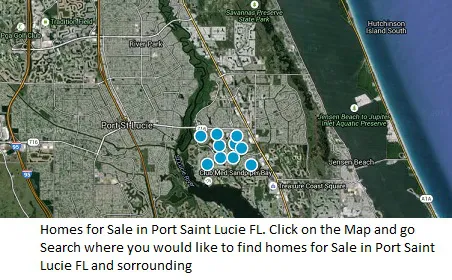
Port St. Lucie Homes for Sale
- Port St. Lucie Homes for Sale
- All Port St. Lucie MLS Listings
- CBS (Concrete Block) Homes for Sale
- Frame Homes for Sale in Port St. Lucie
- Pool Homes for Sale in Port St. Lucie
- Homes for Sale $200,000 to $300,000
- Homes for Sale $300,000 to $400,000
- Pool Homes Under $200,000
- CBS Homes $150,000 to $200,000
- CBS Homes $200,000 to $250,000
- No-HOA CBS Homes Under $175,000
- New Homes in Port St. Lucie
- New Construction Homes Under $500K
- Bedford Park at Tradition Homes for Sale
Port St. Lucie Property Types
Port St. Lucie Homes for Sale by Zip Code
- All 55+ Communities in Port St. Lucie
- Cascades at St. Lucie West 55+ Homes
- Del Webb at Tradition 55+ Homes
- Kings Isle 55+ Homes & Villas
- Lake Park at Tradition 55+ Homes
- Riverland 55+ Homes for Sale
- Savanna Club 55+ Homes for Sale
- Spanish Lakes 55+ Homes for Sale
- Valencia Cay at Riverland Homes for Sale
- Vista St. Lucie 55+ Condos for Sale
- Vitalia at Tradition 55+ Homes
Port St. Lucie Communities & Neighborhoods A-Z
- Aero Acres Airpark Homes for Sale
- Anchorage Waterfront Condos for Sale
- Azalea Homes for Sale
- Ballantrae Homes for Sale
- Bay St. Lucie Homes for Sale
- Belmont at St. Lucie West Condos for Sale
- Belterra Homes for Sale
- Briarcliff at PGA Homes for Sale
- Brystol Homes for Sale
- Cadence at Tradition Homes for Sale
- Callaway at PGA Homes for Sale
- Cambridge Townhomes for Sale
- Camelot Gardens Homes for Sale
- Castle Pines at PGA Homes for Sale
- Club Med & Sandpiper Area Homes for Sale
- The Club at St. Lucie West Condos for Sale
- Copper Creek Homes for Sale
- Country Club Estates Homes for Sale
- Crosstown Commons Homes for Sale
- Cypress Point at PGA Village Homes for Sale
- East Lake Village Townhomes for Sale
- Esplanade at Tradition Homes for Sale
- The Estates at Tradition Homes for Sale
- Evergreen Condos for Sale
- Fountains of St. Lucie Condos for Sale
- Harbour Isles at Lake Charles Homes for Sale
- Heatherwood Homes for Sale
- Heritage Oaks at Tradition Homes for Sale
- Heron Preserve at Tradition Homes for Sale
- Hidden River Estates Homes for Sale
- Highland Glen at Ballantrae Homes for Sale
- Kingsmill at PGA Homes for Sale
- Kitching Cove Estates Homes for Sale
- Lake Charles Homes for Sale
- Lake Lucie Estates Homes for Sale
- The Lakes at PGA Homes for Sale
- The Lakes at St. Lucie West Homes for Sale
- The Lakes at Tradition Homes for Sale
- Lakes Forest Homes for Sale
- Lakes Forest Pointe Homes for Sale
- Magnolia Lakes Homes for Sale
- Maidstone at PGA Homes for Sale
- Meadows at Port St. Lucie Homes for Sale
- Midport Place Homes for Sale
- Newport Isles Homes for Sale
- Oleander Pines Homes for Sale
- Osprey Ridge Homes for Sale
- Paar Estates Homes for Sale
- Parks Edge Homes, Townhomes & Villas for Sale
- PGA Reserve Homes for Sale
- PGA Thompson Point Homes for Sale
- PGA Verano Homes for Sale
- PGA Village Condos for Sale
- Pine Creek at PGA Homes & Condos for Sale
- Pine Trace Homes for Sale
- Pinehurst at PGA Homes for Sale
- The Pines at The Reserve, PGA Village
- Plantation Lakes at PGA Homes for Sale
- River Place Homes for Sale
- River Vista Homes for Sale
- Riverland Homes for Sale
- Rivella & Rivella Island Homes for Sale
- St. James Golf Club Homes for Sale
- St. Lucie Gardens Homes for Sale
- St. Lucie West Homes for Sale
- Sawgrass Lakes Homes for Sale
- Seasons at Tradition Homes for Sale
- South River Shores Waterfront Homes & Condos
- Tarpon Bay Homes for Sale
- Tesoro Club Homes for Sale
- Town Park at Tradition Homes for Sale
- Tradition Homes for Sale
- Treasure Coast Airpark Homes for Sale
- Valencia Cay at Riverland Homes for Sale
- Veranda Gardens Homes for Sale
- Vikings Landing Homes for Sale
- Villas of Sandpiper Bay Homes for Sale
- The Vineyards / Tortoise Cay Homes for Sale
- Vitalia at Tradition 55+ Homes
- Vizcaya Falls Homes for Sale
- Walden Woods Homes for Sale
- Windmill Point Homes for Sale
- Windy Pines Homes for Sale
- Winter Lakes Homes for Sale